NATIONALLY ACCEPTED
Accepted in all 50 states instantly
ILCOR & ECC STANDARDS
Our Courses are as per guidelines
ONLINE ACCESS 24/7
All of our services are 100% online

Simple (Non-advanced) Airways
The simplest way to open the airway is the head tilt-chin lift maneuver:
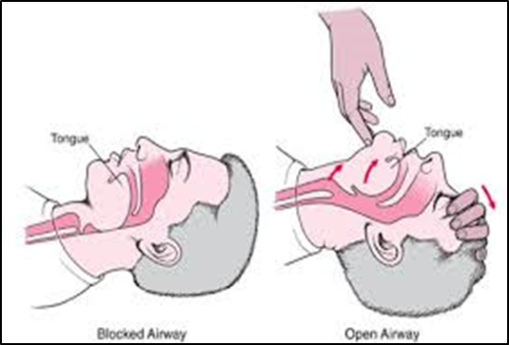
If you suspect an injury to the neck, use the jaw thrust technique instead:

Mouth-to-mask resuscitation is appropriate

Bag-valve mask resuscitation is also a non-advanced airway maneuver


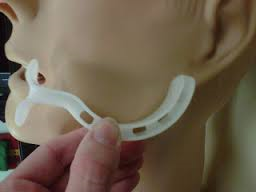
An oropharyngeal airwayis:
Proper sizing:
Should span from side of jaw to corner of mouth
Too large and it will occlude the larynx, and too small will not be effective

A nasopharyngeal airway is:
Proper sizing:
Should span from tip of nose to earlobe
Too large and it will occlude the larynx, and too small will not be effective


Advanced airways required advanced training to insert that is beyond the scope of ACLS. However, ACLS providers may use them once they have been placed.Advanced airways include:
Laryngeal mask airway

Laryngeal tube

Esophageal-tracheal tube (Combitube)

Endotrachealtube

